


Lacromin® – Recombinant human holo-lactoferrin
Recombinant holo-lactoferrin for improvement in performance of select cell culture systems

Name | Price | Qty | |
|---|---|---|---|
$840.00
|
|||
$7,500.00
|
Product Description
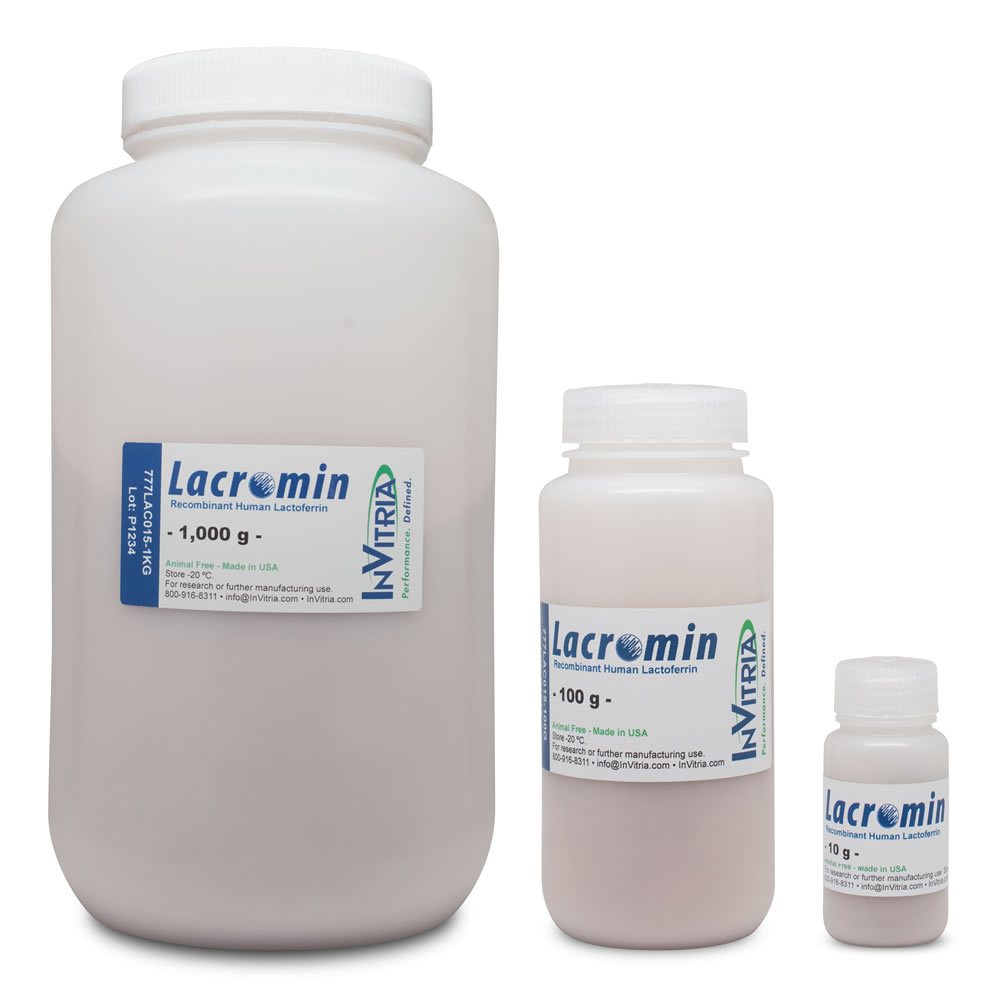
Lacromin® is InVitria's recombinant human holo-lactoferrin (rhLF) — a chemically defined, animal-origin-free cell culture supplement with peer-reviewed growth-factor-like activity in human cells. Lactoferrin is an ~80 kDa iron-binding glycoprotein naturally secreted by epithelial cells and abundant in milk, tears, and mucosal secretions, where it regulates cell proliferation, survival, and antimicrobial defense. Lacromin is produced as the holo-form (iron-saturated) using InVitria's ExpressTec rice grain–based expression platform at an ISO 9001:2015-certified, cGMP-compliant facility in Junction City, Kansas, and is supplied as a pink to reddish lyophilized powder characteristic of iron-saturated lactoferrin.
In peer-reviewed research, Lacromin has been shown to stimulate fibroblast and keratinocyte proliferation in a dose-dependent manner, synergize with FGF2 and EGF to amplify growth-factor responses, antagonize the inhibitory effects of TGF-β1 on cell proliferation, and reduce apoptosis under serum starvation and chemical stress — acting through LRP1 receptor binding and MAPK/ERK signaling (Tang et al., 2010). Lacromin has also been used in published research on ferroptosis biology (Theranostics), neuroprotection (Redox Biology), Alzheimer's disease modeling (Neuropsychopharmacology), and immune cell research (Journal of Immunology), establishing its biological equivalence to native human lactoferrin across diverse experimental contexts.
Lacromin is used in cell culture applications spanning CHO, HEK293, hybridoma, HT29, fibroblast, keratinocyte, and virus production workflows, with typical working concentrations of 10–100 µg/mL depending on application. For iron delivery via the transferrin receptor pathway — the primary iron supplementation mechanism in serum-free media — see Optiferrin, InVitria's recombinant human transferrin. Lactoferrin and transferrin serve distinct functional roles; some formulations include both.
Ready to try Lacromin?
Advantages
Peer-Reviewed Growth-Factor-Like Activity
- Stimulates primary human fibroblast proliferation dose-dependently at 50 µg/mL and above (p < 0.01–0.001) (Tang et al., 2010, Wound Repair and Regeneration).
- Stimulates normal human keratinocyte growth at 100–200 µg/mL in the absence of EGF (p < 0.01–0.001).
- Synergizes with FGF2 to more than double fibroblast proliferation at day 5 versus FGF2 alone (p < 0.0001).
- Synergizes with EGF to amplify keratinocyte growth (p < 0.001) in serum-free conditions.
- Acts through LRP1 receptor binding and MAPK/ERK signaling — confirmed by MEK inhibitor PD98059.
Anti-Apoptotic Performance Under Stress
- Reduces TUNEL-positive (apoptotic) fibroblasts from 34% to 1.7% under serum starvation (Tang et al., 2010).
- Reduces TUNEL-positive fibroblasts from 47% to 9% under TPA exposure.
- Antagonizes TGF-β1's inhibitory effect on fibroblast proliferation, completely blocking growth suppression at 100–200 µg/mL.
- Preserves cell viability in chemically defined, serum-free conditions where survival signals are limited.
Validated Across Multiple Cell Types and Research Contexts
- Used in cell culture applications spanning CHO, HEK293, hybridoma, HT29, fibroblast, keratinocyte, and virus production workflows.
- Published in research on ferroptosis biology in triple-negative breast cancer (Theranostics, 2021).
- Published in research on dopaminergic neurodegeneration in Parkinson's models (Redox Biology, 2019) and neuronal ferroptosis after intracerebral hemorrhage (Redox Biology, 2022).
- Published in research on amyloid precursor protein processing in Alzheimer's disease models (Neuropsychopharmacology, 2017).
- Published in research on IgG secretion in human memory B cells (Journal of Immunology, 2009).
Animal-Origin-Free, U.S.-Manufactured, Defined Composition
- Produced using InVitria's ExpressTec rice grain–based expression platform — non-animal, non-human host system.
- Eliminates adventitious agent risk, regulatory documentation burden, and lot-to-lot variability associated with bovine milk–derived,
- Raw materials, manufacturing equipment, and packaging are fully animal-free.
- Manufactured at InVitria's ISO 9001:2015-certified, cGMP-compliant facility in Junction City, Kansas.
- InVitria owns and operates the complete supply and manufacturing chain for traceability and supply continuity.
Applications
Biopharmaceutical Production (CHO, HEK293, Hybridoma) Lacromin supports cell culture workflows in recombinant protein, antibody, and vaccine production systems, with documented use in CHO, HEK293, and hybridoma cell lines. Its growth-factor-like activity and anti-apoptotic performance translate into improved cell viability and more consistent harvests — particularly in chemically defined or serum-free conditions where cells are more vulnerable to apoptotic stress. Working concentrations of 10–100 µg/mL are typical, with optimal inclusion empirically determined during process development.
Virus and Viral Vector Production Lacromin is used as a cell culture supplement in viral production workflows where sustained cell viability and productivity are critical process attributes. Anti-apoptotic performance under stress conditions helps preserve producer cell health during the stress of viral infection and accumulation, supporting more consistent vector yields. Lacromin is supplied animal-origin-free with full regulatory documentation, making it suitable for both research-scale and GMP-adjacent viral vector production workflows.
Fibroblast and Keratinocyte Research Lacromin is the recombinant human lactoferrin of record in peer-reviewed research on primary human fibroblast and keratinocyte biology. In Tang et al. (2010, Wound Repair and Regeneration), Lacromin stimulated primary human dermal fibroblast proliferation dose-dependently (p < 0.01–0.001 at 50–200 µg/mL), synergized with FGF2 to more than double proliferation versus FGF2 alone (p < 0.0001), and antagonized TGF-β1's inhibitory effects on fibroblast growth. In normal human keratinocytes, Lacromin at 100–200 µg/mL stimulated growth even in the absence of EGF (p < 0.01–0.001) and synergized with EGF at lower doses. The study also demonstrated dose-dependent stimulation of fibroblast migration and identified LRP1 receptor binding and MAPK/ERK signaling as the underlying mechanism. These characterizations make Lacromin the most extensively validated recombinant human lactoferrin for skin cell research applications.
Cell Survival and Anti-Apoptotic Applications Lacromin reduces apoptosis under serum starvation and chemical stress — conditions that commonly compromise cell viability during transitions to serum-free media, long-term culture, or process stresses in biomanufacturing. Tang et al. (2010) demonstrated that 200 µg/mL Lacromin reduced TUNEL-positive (apoptotic) cells from 34% to 1.7% under serum starvation and from 47% to 9% under TPA exposure in primary human fibroblasts. For researchers and process developers working in chemically defined conditions where survival signals are limited, this anti-apoptotic activity can be the difference between a viable and a failed culture.
Growth-Factor-Sparing and Synergistic Formulation Lacromin's synergy with FGF2 and EGF means that formulations including Lacromin can achieve equivalent or superior proliferation at lower growth-factor concentrations — reducing the reliance on expensive recombinant growth factors while maintaining performance. In fibroblast cultures, 100 µg/mL Lacromin combined with 10 ng/mL FGF2 more than doubled proliferation at day 5 versus FGF2 alone (Tang et al., 2010). This has practical implications for chemically defined media design, serum replacement workflows, and cost-of-goods optimization in large-scale cell culture.
Research Reagent for Lactoferrin Biology Beyond cell culture supplementation, Lacromin is used as a recombinant human lactoferrin source in published research across multiple biological research fields. Lacromin has been used in studies of ferroptosis biology in triple-negative breast cancer (Theranostics, 2021), dopaminergic neurodegeneration in MPTP-treated mice modeling Parkinson's disease (Redox Biology, 2019), neuronal ferroptosis after intracerebral hemorrhagic stroke (Redox Biology, 2022), α-secretase–dependent amyloid precursor protein processing in an Alzheimer's disease mouse model (Neuropsychopharmacology, 2017), IgG secretion in human memory B cells (Journal of Immunology, 2009), cystic fibrosis airway secretion biology (The Journal of Clinical Investigation, 2014), and urinary extracellular vesicle isolation (Journal of Extracellular Vesicles, 2022). For research laboratories requiring a chemically defined, animal-origin-free recombinant human lactoferrin for in vivo, biochemistry, or disease-model studies, Lacromin provides the biologically equivalent alternative to native human lactoferrin that peer-reviewed research contexts increasingly require.
Lacromin Technical Specifications
Key specifications for Lacromin as supplied — including purity, endotoxin, formulation, storage, and manufacturing standards. Full Certificate of Analysis available upon request.| Specification | Details |
|---|---|
| Product Name | Lacromin® |
| Brand | InVitria® |
| Catalog Number | 777LAC015 |
| Protein | Recombinant Human Holo-Lactoferrin (rhLF) |
| Class | Milk Protein / Iron-Binding Glycoprotein |
| Synonyms | rhLac, rhLF, Lactotransferrin, LTF |
| Expression System | Recombinant, rice-based expression system |
| Molecular Weight | ~80 kDa |
| Purity | ≥ 90% rhLF |
| Endotoxin Level | < 10 EU/mL (on reconstituted solution) |
| Formulation | Lyophilized powder |
| Concentration | Working range 10–100 µg/mL depending on application; reconstitute to desired stock solution |
| Appearance | Pink to reddish lyophilized powder (holo-form, iron-saturated) |
| Carrier Protein / Stabilizer | None (no additives or preservatives) |
| Sterility | Powder; sterile filter after reconstitution |
| Packaging | 10 g, 100 g, + scale packaging |
| Storage Conditions | –20 °C |
| Shelf Life | 3 years |
| Animal-Origin-Free | Yes |
| Production Standard | ISO 9001:2015, cGMP-compliant facility |
| Country of Origin | USA (Junction City, KS) |
Why Select Lacromin Over Milk-Derived Lactoferrin?
| Key Attribute | Lacromin (rhLF) | Milk-Derived Lactoferrin (hLF) |
|---|---|---|
| PEER-REVIEWED MECHANISM | ||
| LRP1 receptor binding characterized | ✅ Yes (Tang et al., 2010) | ⚠️ Partial; varies by cell type |
| MAPK/ERK signaling characterized | ✅ Yes — validated via PD98059 MEK inhibition | ⚠️ Partial |
| FGF2 synergy (proliferation) | ✅ Yes — significant synergy at 50 µg/mL (p < 0.0001) | ❌ Not characterized |
| EGF synergy (proliferation) | ✅ Yes — significant synergy at 50 µg/mL (p < 0.001) | ❌ Not characterized |
| TGF-β1 antagonism | ✅ Yes — complete blockade at 100–200 µg/mL | ❌ Not characterized |
| Anti-apoptotic data (quantified) | ✅ Yes — TUNEL 34% → 1.7% (starvation); 47% → 9% (TPA) | ⚠️ Limited |
| SAFETY PROFILE | ||
| Recombinant production | ✅ Yes | ❌ No (animal-derived) |
| Animal-origin-free | ✅ Yes | ❌ Animal-derived |
| Blood-free | ✅ Yes | ❌ Derived from animal source |
| Free of adventitious agent risk | ✅ Yes | ❌ Adventitious agent risk present |
| No herd or lot variability | ✅ Yes | ❌ Herd and seasonal variability |
| TSE/BSE risk | ✅ None (no animal source) | ❌ Present (bovine source) |
| FORMULATION ADDITIVES | ||
| Added preservatives | ✅ No | ⚠️ May contain preservatives |
| Added stabilizers | ✅ No | ⚠️ May contain stabilizers |
| LOT-TO-LOT CONSISTENCY | ||
| Consistent lot-to-lot performance | ✅ Yes — controlled recombinant production | ❌ Variable — source-dependent |
| Consistent lot-to-lot performance | ✅ Yes — controlled recombinant production | ❌ Variable — source-dependent |
| Performance traceable to a single manufacturing process | ✅ Yes — ExpressTec platform | ❌ Multi-source, multi-donor, or multi-supplier |
| Quantified lot-to-lot data available | ✅ Yes — controlled production process | ❌ Typically not published |
| SUPPLY CHAIN AND SCALABILITY | ||
| Scalable production (metric-ton capacity) | ✅ Yes | ⚠️ Limited by slaughterhouse supply |
| Supply independent of blood or animal sourcing | ✅ Yes | ❌ Dependent on cattle supply |
| Scale-up partnership with customer programs | ✅ Yes — InVitria scales with customer programs from clinical through commercial | ❌ Typically not provided |
| Vertically integrated supply chain | ✅ Yes — InVitria owns the complete supply chain | ❌ Multiple intermediaries |
| Manufactured in United States | ✅ Yes — Junction City, Kansas | Varies by supplier |
| Supports animal-free and sustainable sourcing mandates | ✅ Yes | ❌ No |
| REGULATORY AND DOCUMENTATION SUPPORT | ||
| ISO 9001:2015 certified manufacturing | ✅ Yes | Varies by supplier |
| cGMP-compliant QMS (21 CFR 210/211) | ✅ Yes | Varies by supplier |
| Certificate of Origin | ✅ Available | Varies by supplier |
| Animal-Free Statement | ✅ Available | ❌ Not applicable |
| Regulatory support package | ✅ Yes — full dossier-quality documentation for IND and BLA submissions | ❌ Limited or supplier-dependent |
| Technical support for regulatory filings | ✅ Yes — InVitria technical team supports customer regulatory submissions | ❌ Not typically provided |
Lacromin Frequently Asked Questions (FAQs)
Product Overview
What Is Lacromin and How Does It Support Cell Culture?
Lacromin® (cat. no. 777LAC015) is a high-purity recombinant human holo-lactoferrin (rhLF) supplied as a lyophilized powder for serum-free and chemically defined cell culture media. In peer-reviewed research, Lacromin has been shown to stimulate cell proliferation, enhance survival under stress, antagonize TGF-β1's inhibitory effects on growth, and synergize with FGF2 and EGF to amplify growth-factor responses — acting through LRP1 receptor binding and MAPK/ERK signaling (Tang et al., 2010, Wound Repair and Regeneration).
What Is the Holo-Form of Lactoferrin and Why Does It Matter?
Lactoferrin is an ~80 kDa iron-binding glycoprotein that exists in two molecular forms: the apo-form (iron-free) and the holo-form (iron-saturated). Lacromin is supplied as holo-lactoferrin — >90% iron-saturated — which appears as a pink to reddish lyophilized powder due to the iron-transferrin-like chromophore. Holo-lactoferrin has been shown to have higher proliferation-promoting activity than apo-lactoferrin in published comparative studies, and iron saturation is associated with the growth-factor-like effects characterized in Tang et al. (2010).
What Is Lacromin Made From?
Lacromin is produced using InVitria's ExpressTec rice grain–based expression platform — a non-animal, non-human host system with no animal-derived or human-derived inputs. Raw materials, manufacturing equipment, and packaging are fully animal-free. This eliminates the batch variability, adventitious agent risk, and regulatory complexity associated with milk-derived or bovine-sourced lactoferrin.
Mechanism and Performance
How Does Lacromin Enhance Cell Proliferation?
Lacromin binds the LRP1 (low-density lipoprotein receptor-related protein 1) receptor on cell surfaces and activates MAPK/ERK signaling, which drives cell proliferation. This mechanism has been directly validated using the MEK inhibitor PD98059, which blocks Lacromin's proliferation effects (Tang et al., 2010). In primary human fibroblasts, Lacromin stimulates proliferation dose-dependently from 50 µg/mL, with p < 0.01–0.001 at day 3–5. In keratinocytes, Lacromin stimulates growth at 100–200 µg/mL even in the absence of EGF.
Does Lacromin Really Protect Cells From Apoptosis?
Yes — and the effect is quantified. In primary human fibroblasts, 200 µg/mL Lacromin reduced TUNEL-positive (apoptotic) cells from 34% to 1.7% under serum starvation, and from 47% to 9% under TPA (phorbol ester) exposure (Tang et al., 2010). These are the most dramatic anti-apoptotic data points in the Lacromin literature and are particularly relevant for chemically defined, serum-free workflows where survival signals are limited.
How Does Lacromin Synergize With FGF2 and EGF?
Lacromin amplifies the proliferation effects of both FGF2 and EGF in published cell culture research. In fibroblasts, 100 µg/mL Lacromin combined with 10 ng/mL FGF2 more than doubled proliferation at day 5 versus FGF2 alone (p < 0.0001). In keratinocytes, 100 µg/mL Lacromin combined with EGF produced strong synergistic growth from days 5–7 (p < 0.001) compared to transferrin controls (Tang et al., 2010). This synergy means formulations can potentially achieve equivalent or superior proliferation at lower growth-factor doses.
What Is LRP1 and Why Does It Matter for Lacromin Function?
LRP1 (low-density lipoprotein receptor-related protein 1) is a cell-surface receptor expressed on human fibroblasts, keratinocytes, and other cell types. Lactoferrin binding to LRP1 activates downstream MAPK/ERK signaling that drives cell proliferation, migration, and survival. This receptor-mediated mechanism distinguishes Lacromin's biological activity from simple iron delivery — Lacromin is a signaling molecule, not just an iron source.
Does Lacromin Antagonize TGF-β1 Inhibition?
Yes. TGF-β1 is a growth inhibitor for most cell types, suppressing proliferation by inhibiting cell cycle progression at G1. In fibroblast cultures treated with 2 ng/mL TGF-β1, the inhibitory effect was completely blocked by co-treatment with 100–200 µg/mL Lacromin (Tang et al., 2010). This antagonism has practical implications for culture systems where TGF-β1 signaling is a confounding inhibitor of proliferation.
Quality and Regulatory
Is Lacromin Animal-Origin-Free and cGMP-Compliant?
Yes. InVitria manufactures Lacromin under a cGMP-compliant Quality Management System (QMS) with respect to 21 CFR Part 210/211 at its ISO 9001:2015-certified facility in Junction City, Kansas, USA. No animal-derived or human-derived inputs are used anywhere in production — raw materials, manufacturing equipment, and packaging are fully animal-free.
What Are the Specifications for Lacromin?
Lacromin is supplied as a lyophilized powder with purity ≥90% rhLF, endotoxin <10.000 EU/mL on reconstituted solution, and no carrier proteins, stabilizers, or preservatives. Molecular weight is approximately 80 kDa. Iron saturation is >90% (holo-form). Lacromin is a non-sterile powder and should be sterile-filtered after reconstitution for aseptic workflows.
What Quality Documentation Is Available for Lacromin?
Lacromin is supported by a Certificate of Analysis (CoA), Safety Data Sheet (SDS), Guidelines for Use, data sheet, Certificate of Origin and Animal-Free / TSE-BSE Statement, ISO 9001 certificate, and cGMP Statement. Additional Quality and Regulatory documentation is available on request.
Does InVitria Provide a Drug Master File (DMF) or Equivalent Regulatory Documentation for Lacromin?
InVitria provides a product-specific Technical Summary for Lacromin containing CMC-style documentation — including manufacturing process, raw material controls, characterization data, release specifications, and lot analysis — designed to support customer regulatory submissions globally, including IND, BLA, and comparable filings under FDA, EMA, and other regulatory authorities. Unlike a Drug Master File, the Technical Summary is provided directly to the customer for incorporation into their own regulatory documentation, giving customers full visibility into the CMC information and supporting global filings without being tied to a single regulatory pathway. The Lacromin Technical Summary is supported by per-lot Certificates of Analysis, Animal-Origin-Free / TSE-BSE statements, ISO 9001 certification, cGMP statements, and change notification under defined policies. Contact us to request the Technical Summary.
Does Lacromin Need to Be Sterile Filtered Before Use?
Yes. Lacromin is supplied as a non-sterile lyophilized powder. Sterile filtration using a 0.2 µm low-protein-binding filter after reconstitution is recommended for any aseptic workflow. Low-protein-binding membranes (PES or PVDF) minimize Lacromin loss during filtration.
Selection and Comparison
What Is the Difference Between Lacromin and Optiferrin?
Lacromin is recombinant human holo-lactoferrin, used primarily for its growth-factor-like activity — stimulating proliferation, enhancing survival, and synergizing with FGF2 and EGF through LRP1 receptor binding and MAPK/ERK signaling. Optiferrin® is recombinant human transferrin, used primarily for iron delivery via the transferrin receptor (TFR1). Both are iron-binding glycoproteins from the same protein family, but they serve different functional roles in cell culture media. Some formulations include both; others use one or the other depending on cell type, application, and iron requirements.
How Does Lacromin Compare to Bovine Milk Lactoferrin?
Bovine milk lactoferrin is the most common lactoferrin source used in research, available from multiple suppliers at lower cost. However, bovine lactoferrin carries the adventitious agent risk, regulatory documentation burden, and species-mismatch concerns associated with animal-derived materials — and it is not the same protein sequence as human lactoferrin, which can affect receptor binding and biological activity in human cell systems. Lacromin is recombinant human lactoferrin with the native human sequence, manufactured without animal-derived materials, with peer-reviewed validation in primary human cell systems.
How Does Lacromin Compare to Yeast-Derived or Aspergillus-Derived Recombinant Lactoferrin?
Recombinant human lactoferrin has been produced in multiple expression systems — including yeast (Pichia pastoris, Saccharomyces cerevisiae), filamentous fungi (Aspergillus niger var. awamori, which produced the clinical-stage talactoferrin), and rice (InVitria's ExpressTec platform that produces Lacromin). Each system has different glycosylation patterns and purification profiles. Lacromin's rice grain–based expression produces a functionally active holo-form recombinant human lactoferrin, with peer-reviewed validation of growth-factor-like activity in primary human fibroblasts and keratinocytes (Tang et al., 2010).
Is Lacromin Better Than Milk-Derived Human Lactoferrin?
Lacromin is a chemically defined, animal-origin-free alternative to biologically sourced human lactoferrin (which is rare, expensive, and difficult to source consistently). It eliminates the adventitious agent risk, regulatory documentation burden, and lot-to-lot variability associated with milk-derived lactoferrin, while providing the same human protein sequence for receptor-mediated biological activity in human cell systems.
Application and Use
Can Lacromin Be Used in Biopharmaceutical Production?
Yes. Lacromin is used in CHO, HEK293, and hybridoma cell culture workflows supporting recombinant protein, antibody, and vaccine production. Its growth-factor-like activity and anti-apoptotic performance translate into improved cell viability and more consistent harvests, particularly in chemically defined or serum-free conditions where cells are more vulnerable to apoptotic stress.
Can Lacromin Be Used in Fibroblast or Keratinocyte Research?
Yes — and Lacromin is specifically validated for these applications in peer-reviewed research. Tang et al. (2010) characterized Lacromin's effects on primary human fibroblast and keratinocyte proliferation, migration, and survival, and identified LRP1 binding and MAPK/ERK signaling as the mechanism. For wound healing research, skin biology studies, and dermal cell research, Lacromin is the most extensively published recombinant human lactoferrin.
Can Lacromin Be Used as a Research Reagent for Lactoferrin Biology?
Yes. Lacromin has been used as a recombinant human lactoferrin source in published research on ferroptosis biology (Theranostics, 2021), dopaminergic neurodegeneration (Redox Biology, 2019), amyloid processing in Alzheimer's models (Neuropsychopharmacology, 2017), memory B cell IgG secretion (Journal of Immunology, 2009), and cystic fibrosis airway biology (Journal of Clinical Investigation, 2014), among other research contexts.
What Concentration of Lacromin Should I Use?
Lacromin has a working concentration range of approximately 10–100 µg/mL for most cell culture applications, with some published research using up to 200 µg/mL for maximum proliferation and anti-apoptotic effects in primary human cells. Optimal inclusion is cell-type dependent and should be empirically determined during process development. Reconstitute to the desired stock concentration per the Guidelines for Use.
How Is Lacromin Reconstituted?
Lacromin is reconstituted in an appropriate culture-grade buffer or basal medium with gentle mixing to minimize foaming. After full dissolution, sterile filtration through a 0.2 µm low-protein-binding filter is recommended prior to use. Detailed reconstitution guidance is provided in the Lacromin Guidelines for Use.
Packaging and Ordering
What Packaging Options Are Available for Lacromin?
Lacromin is available as a lyophilized powder in 10 g and 100 g formats, plus scale packaging for larger manufacturing needs. Contact InVitria for bulk and custom packaging options.
How Can I Order Lacromin?
Lacromin is available worldwide through multiple purchasing pathways. Most customers work directly with InVitria for full access to the Lacromin product portfolio, bulk and commercial-scale supply, GMP supply commitments, and regulatory documentation support. Lacromin is also available through Fisher Scientific, VWR, and the Labviva procurement platform (which integrates with Ariba, Coupa, Oracle, and Jaggaer) for customers whose institutional procurement systems require integrated supplier ordering. European customers can order with direct fulfillment from InVitria's Rotterdam, Netherlands facility. All customers receive the same product, Certificate of Analysis, and technical support regardless of channel. Contact InVitria or request bulk pricing to place an order.
Storage and Handling
How Should Lacromin Be Stored?
Store lyophilized Lacromin at –20°C, protected from light. Shelf life is 3 years from date of manufacture. After reconstitution, follow the Guidelines for Use for storage and handling of prepared stocks to preserve activity.