


Low-DMSO Cryopreservation of MSCs with Optibumin 25 Recombinant Albumin
Published on 15 June 2025
Application Note
EXECUTIVE SUMMARY
This application note demonstrates the use of Optibumin® 25—an animal-origin-free recombinant HSA—for low-DMSO cryopreservation of UC-MSCs. Optibumin matched or outperformed blood-derived HSA, even at DMSO levels as low as 1%, supporting safer, regulatory-friendly workflows for cell therapy manufacturing.
Key Highlights
- Maintains MSC viability at 1–2.5% DMSO
- Reduces apoptosis vs. no-albumin controls
- Performs comparably or better than blood-derived HSA
- Supports closed-system, animal-origin-free workflows
INTRODUCTION
Cryopreservation is a critical step in the manufacture and distribution of mesenchymal stem cell (MSC) therapies. However, suboptimal cryopreservation can lead to poor post-thaw viability, increased apoptosis, and altered downstream functionality. Human serum albumin (HSA) is often included in cryopreservation media to stabilize cells during freeze/thaw cycles. While blood-derived HSA is commonly used to enhance post-thaw cell health (Burnham, 2021) and is present in several on-market cell therapies (Van der Walle, 2021), it also presents risks such as potential pathogen transmission (MacLennan & Barbara, 2006) and batch-to-batch variability. Regulatory agencies now recommend animal-origin-free materials to enhance reproducibility and reduce these risks (U.S. FDA, 2024).
CryoStor® from BioLife is a widely used, chemically defined, protein-free cryopreservation medium that is found in several on-market cell therapy products. It is often combined with Plasma-Lyte® A from and/or human serum albumin during cryopreservation or preparation for administration. The CryoStor product line includes CS10, CS5, and CS2, which contain 10%, 5%, and 2% dimethyl sulfoxide (DMSO), respectively.
Reducing DMSO exposure is a key challenge in cell therapy cryopreservation. High DMSO concentrations have been associated with adverse infusion reactions in patients (Madsen, 2018). A recent study by Tan et al. (2024) emphasized that excessive osmotic fluctuation following thaw can lead to impaired viability and long-term engraftment failure. Moreover, prolonged exposure to high DMSO levels without prompt dilution or stabilization has been shown to induce cellular damage. On-market MSC therapy products like Ryoncil® (Mesoblast) demonstrate the reliance on high-DMSO formulations. According to the package insert, each cryovial of Ryoncil contains 10% DMSO and 5% HSA, requiring dilution with Plasma-Lyte A prior to intravenous administration (Mesoblast, 2024). This dilution step can reduce DMSO toxicity, but introduces logistical complexity and potential variability to clinical workflows.
Optibumin 25 by InVitria is a recombinant human serum albumin (rHSA), produced in a completely animal-free system under cGMP and ISO9001:2015 conditions. It offers consistent, scalable, and regulatory-friendly performance in advanced cell therapy workflows. In this application note, we evaluate the effect of Optibumin 25 inclusion in CS5 and CS2 CryoStor-based cryopreservation of human umbilical cord-derived MSCs (UC-MSCs), benchmarking against blood-derived HSA and a CS10 reference control. Each CryoStor formulation (CS10, CS5, or CS2) was diluted 1:1 with Plasma-Lyte A—with or without albumin at 2.5%, 5%, or 10%—to yield exceptionally low final DMSO con centrations of 5%, 2.5%, and 1%, respectively. These findings presented here highlight the value of cryopreservation approaches that enable DMSO reduction without sacrificing cell health. Optibumin 25 is specifically formulated as a direct replacement for blood-derived HSA in cell therapy workflows. It is supplied as a 25% solution in septum-top bottles as well as bag format, allowing for seamless integration into closed-system manufacturing processes and enabling consistent, animal-origin-free bioprocessing.
RESULTS AND DISCUSSION
Optibumin 25 Enhances MSC Viability in Low-DMSO Formulations
Viability was assessed after the cells were held for 2 hours post-thaw in the cryopreservation formulations, mimicking a clinical workflow in which cryopreserved MSCs are thawed and held in process prior to administration.
In Figure 1, post-thaw viability was assessed using live-cell imaging. CryoStor CS10 served as the high-DMSO reference and supported viability values around 85–87% across both donors. In comparison, the no-albumin control conditions in CS5 showed a drop of approximately 5–10%, with viability values ranging from 75% to 81%. No-albumin CS2 control conditions showed a more substantial decline, with viability dropping to around 65%.
When 5–10% albumin (either HSA or Optibumin 25) was included, viability was significantly improved in both CS5 and CS2 formulations. In CS5, viability increased to approximately 85% with Optibumin 25 or HSA, nearly matching the higher-DMSO CS10
formulation control. In CS2, the addition of 10% Optibumin 25 or HSA improved viability from about 65% to approximately 80%. formulations.
These improvements demonstrate that Optibumin 25 serves as an animal-origin-free solution to mitigate the
detrimental effects of reduced DMSO cryopreservation formulations. Notably, these viability levels were achieved even as final DMSO concentrations were reduced to as low as 1% (in CS2 conditions), underscoring the protective role of Optibumin 25 in ultra-low DMSO formulations.
These findings align with Tan et al. (2024), who noted that reducing DMSO below 10% minimized cytotoxic effects when osmotically balanced. Their study reported a decline in viability over time post-thaw unless DMSO concentrations were appropriately managed or diluted.

Optibumin Prevents Apoptosis in Reduced-DMSO Cryopreservation
Apoptosis was assessed at the same post-thaw timepoint as viability—after a 2-hour hold in the cryopreservation formulations—to replicate typical clinical workflows. As expected, the percentage of apoptotic cells increased as the DMSO concentration decreased. In CS10 controls, apoptosis levels were relatively low (18–21%). In CS5 no-albumin conditions, apoptosis increased to ~30%, and in CS2 no-albumin conditions, apoptosis was highest at approximately 40%. Addition of albumin significantly reduced apoptosis in both CS5 and CS2 conditions. In CS5, 10% HSA reduced apoptosis from 30% to about 22%, while 10% Optibumin lowered it to approximately 20%.
In CS2, the inclusion of 10% HSA or Optibumin 25 dramatically reduced apoptosis from 41% to 28%. These improvements suggest that albumin helps stabilize cells during the post-thaw hold period, potentially by buffering osmotic stress and limiting membrane damage.
Across both donors, Optibumin 25 performed comparably or better than HSA, particularly at the 10% concentration. These results demonstrate that Optibumin 25 is not only effective in protecting MSCs from apoptosis but also provides a regulatory-friendly alternative to blood-derived HSA for clinical cryopreservation workflows.

CONCLUSION
Optibumin 25 demonstrated performance comparable to or better than human-derived HSA in supporting post-thaw MSC viability and reducing apoptosis. Notably, 5–10% Optibumin 25 in CS5 or CS2 cryopreservation restored MSC health to levels seen in higher-DMSO CS10 control conditions—even as final DMSO concentrations were reduced to just 2.5% and 1%, respectively.
These findings support the use of Optibumin 25 to enhance cryopreservation outcomes in reduced-DMSO workflows, which are increasingly desired due to the known adverse effects of DMSO. By enabling effective cryopreservation at exceptionally low DMSO levels, eliminating the need for blood-derived HSA, and avoiding dilution steps post-thaw, Optibumin 25 supports safer, scalable, and regulatory-compliant MSC manufacturing. In addition, its availability in bag format supports integration into closed-system workflows, further streamlining manufacturing and regulatory compliance.
MATERIALS AND METHODS
UC-MSCs from two donors were expanded to passage 4 and cryopreserved at 7 million cells/mL in conditions composed of CryoStor CS10, CS5, or CS2 diluted 1:1 with Plasmalyte A. Albumin (either Optibumin or blood-derived HSA) was added at 2.5%, 5%, or 10% final concentration where indicated. The 1:1 dilution of CryoStor CS10, CS5, and CS2 with Plasmalyte A (with or without albumin) resulted in final DMSO concentrations of 5%, 2.5%, and 1%, respectively. Following freezing in Mr. Frosty™ device at -80°C, cells were rapidly thawed in 37°C water bath and held in cryopreservation medium for 2 hours at room temperature before being plated in standard culture media. This 2-hour post-thaw hold was designed to mimic the typical delay between thaw and administration in clinical workflows. Live-cell imaging was used to assess viability, apoptosis, and recovery post-thaw.
Featured Solution
Optibumin 25 – Recombinant Human Albumin for Low-DMSO Cryopreservation
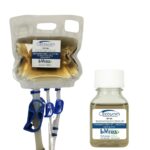 Optibumin 25 is a recombinant, animal-origin-free human serum albumin designed to replace blood-derived HSA in cryopreservation workflows. In chemically defined conditions, Optibumin 25 supports post-thaw MSC recovery and viability at DMSO levels as low as 1–2.5%, while also reducing apoptosis compared to no-albumin controls. By eliminating the risks of adventitious agents and lot-to-lot variability associated with plasma-derived albumin, Optibumin 25 enables safer, scalable, and regulatory-compliant cryopreservation. Its availability in bottle and bag formats further supports closed-system manufacturing, helping biomanufacturers streamline workflows for cell therapy applications
Download the Full Application Note
The following content is gated. Please, subscribe to open access to it.
Footnotes
Refernces
- Marquez-Curtis, L. A., Elliott, J. A.W. (2024). Mesenchymal stromal cells derived from various tissues: Biological, clinical and cryopreservation aspects: Update from 2015 review. Cryobiology, 115, 104856. https://doi.org/10.1016/j.cryobiol.2024.104856
- Tan, Y., et al. (2024). Key quality parameter comparison of mesenchymal stem cell product cryopreserved in different cryopreservation solutions for clinical applications. Frontiers in Bioengineering and Biotechnology, 12, 1412811. https://doi.org/10.3389/fbioe.2024.1412811
- Mesoblast. (2024). RYONCIL (remestemcel-L) [package insert]. U.S. Food and Drug Administration. fda.gov/media/184603/download
- Burnham, R. E., et al. (2021). Human serum albumin and chromatin condensation rescue ex vivo expanded γδ T cells from the effects of cryopreservation. Cryobiology, 99, 78–87. https://doi.org/10.1016/j.cryobiol.2021.01.011
- Van der Walle, C. F., et al. (2021). Formulation considerations for autologous T cell drug products. Pharmaceutics, 13(8), 1317. https://doi.org/10.3390/pharmaceutics13081317
- MacLennan, S., & Barbara, J. A. J. (2006). Risks and side effects of therapy with plasma and plasma fractions. Best Practice & Research Clinical Haematology, 19(1), 169–189. https://doi.org/10.1016/j.beha.2005.01.033
- Lu, H., Zhang, Y., & Liu, P. (2024). Identifying new safety risk of human serum albumin: A retrospective study of real-world data. Frontiers in Pharmacology, 15, 1319900. https://doi.org/10.3389/fphar.2024.1319900
- U.S. Food and Drug Administration. (2024). Considerations for the use of human- and animal-derived materials in the manufacture of cell and gene therapy and tissue-engineered medical products. April 2024. Docket Number: FDA-2024-D-1244. https://www.regulations.gov/docket/FDA-2024-D-1244
- Madsen, B. K., et al. (2018). Adverse reactions of dimethyl sulfoxide in humans: A systematic review. F1000Research, 7. https://doi.org/10.12688/f1000research.16642.2