


Recombinant Albumin Reduces Lentiviral Vector Titer Loss During 24-Hour Hold Times
Published on 19 June 2026
Application Note
Executive Summary
Lentiviral vectors (LVVs) are widely used in cell and gene therapy manufacturing, but infectious titer is rapidly lost during transfer, storage and hold times in downstream processing. LVVs may be exposed to refrigerated or room temperature conditions for several hours before the next manufacturing step. In this study, purified VSV-G-pseudotyped GFP lentivirus was held for 24 hours at either 4 °C or room temperature in Hanks’ balanced salt solution (HBSS) with or without 1% (m/v) Optibumin 25 recombinant human serum albumin (rHSA). Under the conditions tested, 1% Optibumin 25 maintained genomic titer near freshly prepared control sample levels and significantly increased post-hold infectious titer compared with HBSS alone. These results support further evaluation of recombinant albumin as a stabilizing excipient for LVV hold times in downstream processing.
Key Highlights
- Genomic titer preserved at 4 °C.
- Genomic titer preserved at room temperature.
- ~2.5-fold higher infectious titer retention at 4 °C.
- Nearly 5-fold higher infectious titer retention at room temperature. Significantly reduced 24-hour LVV hold time loss.
Introduction
Lentiviral vectors (LVVs) have been a critical component of advanced therapies since the approval of the first chimeric antigen receptor (CAR) T cell therapy, Kymriah, in 2017. LVVs are the most widely used method to introduce the CAR gene into T cells, allowing engineered immune cells to recognize and kill tumor cells. Unfortunately, LVVs, like other enveloped viral vectors, are inherently unstable and highly sensitive to elevated temperatures and formulation composition. Lentivirus infectivity decays exponentially over time, leading to rapid losses. Depending on the pseudotype and storage conditions, the half-life can be as short as a few hours at 37 °C (Dautzenberg et al., 2021; Carmo et al., 2009a; Higashikawa & Chang, 2001).
These losses are economically significant because LVV production is a major contributor to the cost of cell and gene therapy manufacturing (Comisel et al., 2021). With the emergence of in vivo CAR-T approaches, where the lentiviral vector itself constitutes the drug product, maintaining infectious LVV titer during processing and short-term holds is increasingly important.
This instability also creates operational challenges during LVV manufacturing. Processing steps and hold times between unit operations can last several hours, during which vector preparations may be exposed to refrigerated or room temperature conditions. As a result, time- and temperature-related losses occur throughout harvest, clarification, purification, concentration, formulation, and transfer steps. Downstream processing workflows are therefore optimized for speed (Bandeira et al., 2012; Ghosh et al., 2022; Martínez-Molina et al., 2020; Valkama et al., 2020).
In addition to reducing processing time, efforts to improve infectious LVV yield often include optimizing formulations with excipients such as trehalose, HEPES, mannitol, and arginine among others. These formulations can maintain infectious titer by supporting vector stability under specific conditions (Carmo et al., 2009a; Kumru et al., 2018; Luostarinen et al., 2024). However, infectious titer loss remains a persistent challenge because LVVs can lose infectivity through multiple mechanisms which these additives do not fully address. These include aggregation, adsorption to processing surfaces, shear-related envelope damage, and loss of reverse transcriptase activity under thermal stress (Carmo et al., 2009b; Kumru et al., 2018; Perry et al., 2024).
Human serum albumin (HSA) has been evaluated as a stabilizing excipient for lentiviral, gammaretroviral, and other enveloped viral vectors because it addresses several of these loss mechanisms simultaneously. Albumin interacts with phospholipid membranes that make up viral envelopes, reduces surface adsorption through sacrificial coating, provides colloidal stabilization and protects against interfacial stress during processing (Lu et al., 1999; Bandeira et al., 2012; Przybyłek et al., 2024). In addition, prior work has shown that recombinant HSA (rHSA) can stabilize gammaretroviral and lentiviral vectors, including under conditions where thermal stress contributes to loss of reverse transcriptase activity (Carmo et al., 2009a).
Albumin has also been used in vaccine and viral vector formulations with other stabilizing excipients (Burke & Volkin, 2001; Hansen et al., 2015; Wiggan et al., 2011; Carmo et al., 2009a; Eilts et al., 2023). For short-term LVV holds, albumin is especially relevant because its proposed mechanisms, including surface passivation, interfacial protection, colloidal stabilization, and membrane-associated stabilization, directly address stresses encountered during liquid handling and downstream processing. There is also precedent for the use of recombinant albumin in enveloped viral vaccine formulation: InVitria’s recombinant albumin is used as an excipient in Merck’s ERVEBO®, a recombinant vesicular stomatitis virus-based vaccine against Ebola Zaire (European Medicines Agency, 2019; U.S. Food and Drug Administration, 2026; Quinn, 2020). Because ERVEBO is an enveloped viral vaccine platform, this precedent supports further evaluation of recombinant albumin as a stabilizing excipient for LVV and related enveloped viral vector formulations.
In this application note, we characterize the effects of InVitria’s Optibumin 25, a recombinant, human serum albumin produced in an animal-origin-free expression system, on the hold time stability of purified VSV-G pseudotyped LVVs.
Results and Discussion
To assess the effects of recombinant albumin on LVV hold-time stability, purified GFP expressing VSV-G pseudotyped lentivirus samples were diluted in Hanks’ balanced salt solution (HBSS) to a final volume of 10 mL and incubated with or without 1% (m/v) Optibumin 25 at 4 °C (Figure 1) or room temperature (Figure 2). After the hold period, genomic and infectious titers were measured and compared with a freshly prepared control sample that had not undergone a hold time.
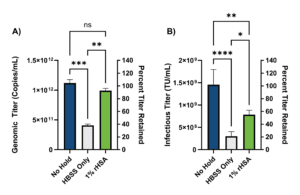
Figure 1. Characterization of (A) genomic titer and (B) infectious titer of LVV samples held at 4 °C for
24 hours with (green) or without (gray) 1% rHSA relative to a fresh control sample (blue). **** p <
0.0001, *** p < 0.001, ** p < 0.01, * p < 0.05, by one-way ANOVA with Tukey’s post hoc test.

Figure 2. Characterization of (A) genomic titer and (B) infectious titer of LVV samples held at RT for
24 hours with (green) or without (gray) 1% rHSA relative to a fresh control sample (blue). **** p <
0.0001, *** p < 0.001, ** p < 0.01, * p < 0.05, by one-way ANOVA with Tukey’s post hoc test.
At 4 °C, the 24-hour hold significantly reduced the final genomic titer (Figure 1A) in the HBSS only condition, with approximately 40% of the initial genomic titer retained relative to the fresh control (Figure 1A). In contrast, the addition of 1% Optibumin 25 maintained genomic titer at over 90% of the fresh control level, with no significant reduction after the 24-hour hold. These data indicate that recombinant albumin significantly reduced genomic titer loss during refrigerated hold conditions.
Infectious titer results at 4 °C followed the same overall trend but showed greater sensitivity to the hold condition (Figure 1B). In the HBSS only condition, approximately 20% of infectious titer was retained after the 24-hour refrigerated hold while the sample formulated with 1% Optibumin 25 retained approximately 50% of infectious titer. Although post-hold infectious titer remained lower than the fresh control, Optibumin 25 produced an approximate 2.5-fold increase in retained infectious titer compared with HBSS alone, which was a significant improvement.
Titer losses were greater after the 24-hour room temperature hold, as expected based on the known thermal instability of LVVs. In the HBSS only condition, genomic titer decreased by more than 80% relative to the fresh control (Figure 2A). In contrast, the formulation containing 1% Optibumin 25 showed only an approximately 20% reduction in genomic titer, which was not significantly different from the fresh control.
Infectious titer was also substantially reduced by the room temperature hold (Figure 2B). In HBSS alone, more than 90% of the infectious titer was lost after 24 hours. Addition of 1% Optibumin 25 retained approximately 25% of the initial infectious titer, corresponding to a nearly fivefold increase in retained infectious virus compared with HBSS alone. These results show that recombinant albumin significantly improved infectious titer retention during a 24-hour exposure to room temperature, although it did not fully prevent infectious titer loss.
To optimize the observed stabilizing effects of recombinant albumin on LVVs, a titration of albumin from 8% down to 0.125% in the LVV formulation was performed and these samples along with an albumin-free control were incubated for 24 hours at room temperature. After the incubation, the infectious titer was measured (Figure 3).
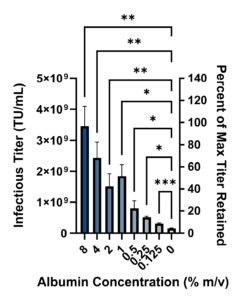
Figure 3. Characterization of the effect of recombinant albumin concentration on infectious titer
retention after 24 hour incubation at room temperature. **** p < 0.0001, *** p < 0.001, ** p < 0.01, * p < 0.05, by
Welch’s ANOVA with Dunnett’s post hoc test.
A significant increase in titer retention was observed at all concentrations tested. The stabilizing effects of albumin in these conditions showed a strong dose dependence with higher albumin concentrations resulting in more titer retention. At the 8% albumin concentration there was a 22-fold increase in titer retention relative to the albumin free-control and a 1.8-fold increase in retention relative to the 1% condition used in the previous experiments. These ratios are similar to the ratios of the fresh sample, 1% albumin sample and no albumin control in the room temperature hold time shown in Figure 2 suggesting that nearly all the titer is retained with 8% albumin. This dose dependence should give manufacturers flexibility to add albumin at the concentration that is most cost effective in their process.
Together, the 4 °C and room-temperature data demonstrate that Optibumin 25 reduced LVV titer loss during 24-hour hold times in a simple HBSS-based formulation. The protective effect was observed for both genomic and infectious titer, but the magnitude of protection differed between assays. Genomic titer was maintained near fresh control levels in the presence of 1% Optibumin 25, while infectious titer was improved but not fully retained. This divergence is consistent with the greater sensitivity of infectious titer measurements to functional damage of the viral envelope, VSV-G glycoprotein, capsid-associated structures, or reverse transcriptase activity. A viral particle may remain detectable by genomic methods while losing infectivity if one or more functional components required for cell entry, reverse transcription, or transduction is damaged. Ratios of infectious titer to genomic titers typically range from 0.1 to 1% which agrees with this dataset (Stibbs et al., 2024).
These findings also complement previous InVitria work evaluating recombinant albumin during LVV tangential flow filtration (Stathos et al., 2026a), sterile filtration (Stathos et al., 2026b), and cryopreservation (Stathos et al., 2026c). Furthermore, the results of the titration experiment suggest that regardless of the amount of albumin used in these other unit operations, it is likely that hold time benefits will also be observed. Across these datasets, recombinant albumin showed protective effects during manufacturing-relevant stresses involving surfaces, interfaces, temperature exposure, freeze-thaw handling, and formulation conditions.
Conclusion
Short-term hold steps throughout lentivirus downstream processing are significant contributors to loss of infectious LVV titer. Supplementation with Optibumin 25 recombinant human serum albumin reduced LVV titer loss during 24-hour holds at both 4 °C and room temperature in a simple HBSS-based formulation. Optibumin 25 maintained genomic titer near fresh control levels under both hold temperatures and increased retained infectious titer by approximately 2.5-fold at 4 °C and nearly fivefold at room temperature compared with HBSS alone. Although Optibumin 25 did not eliminate infectious titer loss, it significantly improved infectious titer retention under the conditions tested. These findings support further evaluation of Optibumin 25 as a stabilizing excipient for LVV downstream processing and final formulation strategies, including under process-relevant conditions such as varied vector concentrations, pseudotypes, containers, fill volumes, hold durations, temperatures, and buffer systems.
Featured Solution
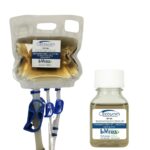
Optibumin 25 – Recombinant Human Serum Albumin, 25% Solution – Animal-Origin-Free, GMP-Produced
Optibumin 25 is a chemically defined, recombinant human serum albumin designed to support viral vector stability and recovery during downstream processing. In this application note, supplementation with 1% Optibumin 25 reduced lentiviral vector titer loss during 24-hour hold times at both 4 °C and room temperature in a simple HBSS-based formulation, maintaining genomic titer near fresh control levels and increasing retained infectious titer approximately 2.5-fold at 4 °C and nearly fivefold at room temperature compared with HBSS alone. The observed protection is consistent with albumin’s role in surface passivation, interfacial protection, and colloidal stabilization, helping mitigate adsorption-, aggregation-, and interface-related LVV losses during processing delays.
Unlike plasma-derived HSA, Optibumin is animal-origin-free and avoids the variability, supply concerns, and regulatory burden associated with blood-derived materials. Supplied as a ready-to-use 25% solution, Optibumin integrates easily into downstream processing workflows as a stabilizing excipient during hold steps and as a final formulation component.
Optibumin 25 is well suited for gene therapy and cell therapy manufacturing workflows where infectious titer recovery, process consistency, and chemically defined raw materials are critical.
Ready to try Optibumin 25?
Get a free evaluation sample or request a quote for your project.
Frequently Asked Questions (FAQs)
What problem does this application note address? This application note addresses infectious lentiviral vector (LVV) titer loss during short-term hold times in downstream processing. LVVs are inherently unstable and lose infectivity during the transfer, storage, and hold steps between unit operations, where vector preparations may sit at refrigerated or room temperature conditions for several hours before the next manufacturing step.
How was Optibumin 25 evaluated in this study? Purified VSV-G-pseudotyped GFP lentivirus was diluted in Hanks’ balanced salt solution (HBSS) with or without 1% (m/v) Optibumin 25 and held for 24 hours at either 4 °C or room temperature. After the hold, genomic and infectious titers were measured and compared with a freshly prepared control sample that had not undergone a hold time.
What effect did Optibumin 25 have on genomic titer? Optibumin 25 maintained genomic titer near fresh control levels at both hold temperatures. At 4 °C, the HBSS-only condition retained approximately 40% of genomic titer, while 1% Optibumin 25 maintained over 90% with no significant reduction. At room temperature, HBSS alone lost more than 80% of genomic titer, while 1% Optibumin 25 showed only an approximately 20% reduction that was not significantly different from the fresh control.
What effect did Optibumin 25 have on infectious titer? Infectious titer was more sensitive to the hold than genomic titer, but Optibumin 25 still significantly improved retention. At 4 °C, 1% Optibumin 25 produced an approximate 2.5-fold increase in retained infectious titer compared with HBSS alone (~50% vs. ~20% retained). At room temperature, it produced a nearly fivefold increase (~25% retained vs. more than 90% lost in HBSS alone). Optibumin 25 improved but did not fully prevent infectious titer loss under the conditions tested.
Why did genomic and infectious titer respond differently? Infectious titer measurements are more sensitive to functional damage of the viral envelope, VSV-G glycoprotein, capsid-associated structures, or reverse transcriptase activity. A viral particle may remain detectable by genomic methods while losing infectivity if a component required for cell entry, reverse transcription, or transduction is damaged. This is consistent with the typical infectious-to-genomic titer ratio of roughly 0.1 to 1%.
Does albumin concentration affect the level of protection? Yes. A titration from 0.125% to 8% albumin held 24 hours at room temperature showed a significant increase in titer retention at all concentrations tested, with a strong dose dependence. At 8% albumin, there was a 22-fold increase in titer retention relative to the albumin-free control and a 1.8-fold increase relative to the 1% condition, suggesting nearly all titer is retained at 8%. This dose dependence is intended to give manufacturers flexibility to add albumin at the concentration most cost-effective for their process.
Why use Optibumin 25 instead of plasma-derived HSA? Optibumin 25 is a recombinant, animal-origin-free human serum albumin produced in an animal-origin-free expression system, avoiding reliance on blood-derived raw materials. There is also precedent for recombinant albumin in enveloped viral product formulation: InVitria’s recombinant albumin is used as an excipient in Merck’s ERVEBO®, a recombinant VSV-based Ebola Zaire vaccine. These findings support further evaluation of Optibumin 25 as a stabilizing excipient for LVV downstream processing and final formulation strategies.
The following content is gated. Please, subscribe to open access to it.
Footnotes
REFERENCES
- Bandeira, V., Peixoto, C., Rodrigues, A. F., Cruz, P. E., Alves, P. M., Coroadinha, A. S., & Carrondo, M. J. T. (2012). Down stream processing of lentiviral vectors: Releasing bottlenecks. Human Gene Therapy Methods, 23(4), 255–263. https://doi.org/10.1089/hgtb.2012.059
- Burke, C. W., & Volkin, D. B. (2001). Stabilized viral formulations (U.S. Patent No. 6,210,683 B1). U.S. Patent and Trademark Office. https://patents.google.com/patent/US6210683B1/en
- Carmo, M., Alves, A., Rodrigues, A. F., Coroadinha, A. S., Carrondo, M. J. T., Alves, P. M., & Cruz, P. E. (2009a). Stabilization of gammaretroviral and lentiviral vectors: From production to gene transfer. The Journal of Gene Medicine, 11(8), 670 678. https://doi.org/10.1002/jgm.1353
- Carmo, M., Dias, J. D., Panet, A., Coroadinha, A. S., Carrondo, M. J. T., Alves, P. M., & Cruz, P. E. (2009b). Thermosensitivity of the reverse transcription process as an inactivation mechanism of lentiviral vectors. Human Gene Therapy, 20(10), 1168–1176. https://doi.org/10.1089/hum.2009.068
- Comisel, R. M., Faulkner, P., Butler, M., & Gagnon, P. (2021). Lentiviral vector bioprocess economics for cell and gene therapy commercialization. Biochemical Engineering Journal, 168, Article 107868. https://doi.org/10.1016/j.bej.2020.107868
- Dautzenberg, I. J. C., Rabelink, M. J. W. E., & Hoeben, R. C. (2021). The stability of envelope-pseudotyped lentiviral vectors. Gene Therapy, 28(1–2), 89–104. https://doi.org/10.1038/s41434-020-00193-y
- Eilts, F., Harsy, Y. M. J., Lothert, K., Pagallies, F., Amann, R., & Wolff, M. W. (2023). An investigation of excipients for a stable Orf viral vector formulation. Virus Research, 336, Article 199213. https://doi.org/10.1016/j.virusres.2023.199213
- European Medicines Agency. (2019). Ervebo: Ebola Zaire vaccine assessment report (EMA/606159/2019). https://www.ema.europa.eu/en/medicines/human/EPAR/ervebo
- Ghosh, R., Koley, S., Gopal, S., Rodrigues, A. L., Dordick, J. S., & Cramer, S. M. (2022). Evaluation of lentiviral vector stability and development of ion exchange purification processes. Biotechnology Progress, 38(6), Article e3286. https://doi.org/10.1002/btpr.3286
- Hansen, L. J. J., Daoussi, R., Vervaet, C., Remon, J.-P., & De Beer, T. R. M. (2015). Freeze-drying of live virus vaccines: A review. Vaccine, 33(42), 5507–5519. https://doi.org/10.1016/j.vaccine.2015.08.085
- Higashikawa, F., & Chang, L. J. (2001). Kinetic analyses of stability of simple and complex retroviral vectors. Virology, 280(1), 124–131. https://doi.org/10.1006/viro.2000.0743
- Kumru, O. S., Wang, Y., Gombotz, C. W. R., Kelley-Clarke, B., Cieplak, W., Kim, T., Joshi, S. B., & Volkin, D. B. (2018). Physical characterization and stabilization of a lentiviral vector against adsorption and freeze-thaw. Journal of Pharmaceutical Sciences, 107(11), 2764–2774. https://doi.org/10.1016/j.xphs.2018.07.010
- Lu, J. R., Su, T. J., & Penfold, J. (1999). Adsorption of serum albumins at the air/water interface. Langmuir, 15(20), 6975–6983. https://doi.org/10.1021/la990131h
- Luostarinen, A., Kailaanmäki, A., Turkki, V., Köylijärvi, M., Käyhty, P., Leinonen, H., Albers-Skirdenko, V., Lipponen, E., Ylä-Herttuala, S., Kaartinen, T., Lesch, H. P., & Kekarainen, T. (2024). Optimizing lentiviral vector formulation conditions for efficient ex vivo transduction of primary human T cells in chimeric antigen receptor T-cell manufacturing. Cytotherapy, 26(10), 1084–1094. https://doi.org/10.1016/j.jcyt.2024.04.002
- Martínez-Molina, E., Chocarro-Wrona, C., Martínez-Moreno, D., Marchal, J. A., & Boulaiz, H. (2020). Large-scale production of lentiviral vectors: Current perspectives and challenges. Pharmaceutics, 12(11), Article 1051. https://doi.org/10.3390/pharmaceutics12111051
- Perry, C., Mujahid, N., Takeuchi, Y., & Rayat, A. C. M. E. (2024). Insights into product and process related challenges of lentiviral vector bioprocessing. Biotechnology and Bioengineering, 121(8), 2466–2481. https://doi.org/10.1002/bit.28498
- Przybyłek, M., Bełdowski, P., Ledziński, D., Lutowski, Z., Mazurkiewicz, A., Raczyński, P., Dedinaite, A., & Claesson, P. M. (2024). Molecular insights into the interactions between human serum albumin and phospholipid membranes. Applied Sciences, 14(24), Article 11753. https://doi.org/10.3390/app142411753
- Quinn, K. S. (2020). Novel or not? Our inadvertent journey filing a novel excipient [Webinar presentation]. Merck & Co.; IPEC-Americas Excipient World Webinar Series. https://education.ipecamericas.org/courses/3018
- Stathos, M., Michaels, W., Huseman, Z., Webber, J., & Curl, M. (2026a). rHSA Improves Infectious Lentiviral Titer Yield During Tangential Flow Filtration by Passivating Filter Surfaces [Application note]. InVitria, Inc. https://invitria.com/resources/rhsa-improves-infectious-lentiviral-titer-yield-during-tangential-flow-filtration-by-passivating-filter-surfaces
- Recombinant Albumin Reduces Lentiviral Vector Titer Loss During 24-Hour Hold Times | 6 APPLICATION NOTE Stathos, M., Michaels, W., & Curl, M. (2026b). Preserving Lentiviral Titer During Sterile Filtration Using Recombinant Albumin [Application note]. InVitria, Inc. https://invitria.com/resources/preserving-lentiviral-titer-during-sterile-filtration-using-recombinant-albumin
- Stathos, M., Michaels, W., & Curl, M. (2026c). Recombinant albumin improves lentiviral vector recovery after freeze-thaw
stress [Application note]. InVitria, Inc. https://invitria.com/resources/recombinant-albumin-improves-lentiviral-vector-recovery-after-freeze-thaw-stress - Stibbs, H. H., Lendon, K., McDonald, D., McLachlan, R., Tapping, R. I., & Schaffer, D. V. (2024). Lentiviral vector adsorption and recovery during downstream processing: Mechanisms and mitigation strategies. Molecular Therapy: Methods & Clinical Development, 32, 101209. https://doi.org/10.1016/j.omtm.2024.101209
- U.S. Food and Drug Administration. (2026). Package insert: ERVEBO® (Ebola Zaire Vaccine, Live), injectable suspension, for
intramuscular use. Merck Sharp & Dohme LLC. https://www.fda.gov/files/vaccines%2C%20blood%20%26%20biologics/published/Package-Insert-ERVEBO_1.pdf - Valkama, A. J., Oruetxebarria, I., Lipponen, E. M., Leinonen, H. M., Käyhty, P., Hynynen, H., Turkki, V., Malinen, J., Miinalainen, T., Heikura, T., Parker, N. R., Ylä-Herttuala, S., & Lesch, H. P. (2020). Development of large-scale down stream processing for lentiviral vectors. Molecular Therapy: Methods & Clinical Development, 17, 717–730. https://doi.org/10.1016/j.omtm.2020.03.025
- Wiggan, O., Livengood, J. A., Silengo, S. J., Kinney, R. M., Osorio, J. E., Huang, C. Y.-H., & Stinchcomb, D. T. (2011). Novel
formulations enhance the thermal stability of live-attenuated flavivirus vaccines. Vaccine, 29(43), 7456–7462. https://doi.org/10.1016/j.vaccine.2011.07.054