


Safety and Contamination Risks: The Testing Burden and Persistent Threats
Published on 21 January 2026
Article
Reading time: 3 minutes
Share this article:


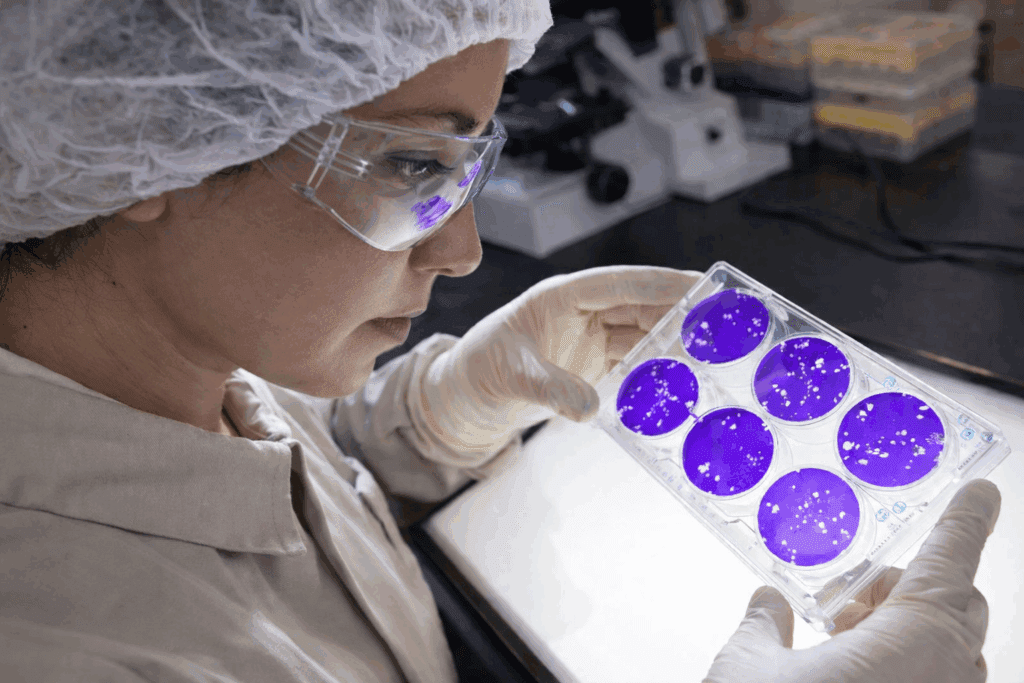
Biomanufacturing safety is currently compromised by the persistent risk of adventitious agents inherent to serum-derived products. Fetal bovine serum (FBS) is frequently contaminated with bovine viral diarrhea virus (BVDV), a virus that can evade standard filtration and survive irradiation. Human AB serum presents a different but equally significant risk profile, requiring exhaustive screening for bloodborne pathogens and nucleic acid testing. Beyond active pathogens, compliance with transmissible spongiform encephalopathy (TSE) and bovine spongiform encephalopathy (BSE) regulations introduces significant hidden costs. Internal estimates place the annual burden of documentation, testing, qualification, and quality oversight for maintaining BSE/TSE-free raw materials at up to $50,000 per program, depending on product type and regulatory scope. In addition, recent FDA guidance has introduced the potential requirement for Creutzfeldt-Jakob disease (CJD) and variant CJD (vCJD) warning labels on products containing plasma-derived human serum albumin (HSA), citing that the possibility of transmission cannot be absolutely ruled out.
To eliminate these testing burdens and liability risks, the industry must transition to chemically defined, recombinant alternatives that are completely removed from the animal and human donor supply chain.
Viral Contamination in Fetal Bovine Serum
Fetal bovine serum is frequently contaminated with bovine viral diarrhea virus (BVDV), a pestivirus that can compromise cell culture systems and biological products. Multiple studies have documented the prevalence and persistence of BVDV contamination:
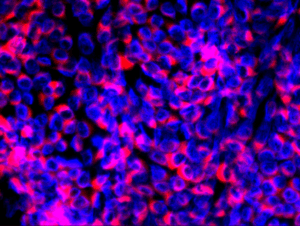
- Approximately 80% of commercial FBS lots contain detectable BVDV RNA when sensitive detection methods are used (Giangaspero et al., 1999; Salgado-Miranda et al., 2021).
- In one study, 62.5% of tested samples, including cell lines and veterinary vaccines, were contaminated with BVDV (Salgado-Miranda et al., 2021).
- BVDV can pass through standard filtration processes used in FBS preparation because of its small size and pleomorphism structure (Giangaspero et al., 1999).
- Gamma irradiation at 30 kGy is often required to reduce viral load, yet complete viral inactivation is not guaranteed (Blümel et al., 2021)
The consequences of BVDV contamination extend beyond research artifacts. Reported impacts include immunosuppression in vaccines, cross-contamination across different cell lines (with 24% of diverse cultures testing positive), and diagnostic interference. In one analysis, 24% of diverse cell cultures tested positive for BVDV contamination (Salgado-Miranda et al., 2021). In addition to BVDV, FBS must be tested for other adventitious agents, including porcine parvovirus (PPV) and pseudorabies virus (PRV) (Blümel et al., 2021).
Human Serum: Pathogen Risks and Testing Requirement
For cell therapy manufacturers using human AB serum, particularly in CAR-T cell expansion workflows, the safety profile is different but no less concerning. Human serum must undergo extensive testing for bloodborne pathogens and other contaminants (dos Santos et al., 2016):
- Serological assays: HIV type 1 and 2, hepatitis B (HBV), hepatitis C (HCV), Chagas disease, syphilis, and human t-cell lymphotropic virus (HTLV) types 1 and 2.
- Nucleic acid testing (NAT): HIV, HBV , and HCV.
- Microbiological testing: Detection of bacteria, fungi, and mycoplasma
- Endotoxin testing: Required for injectable or cell therapy applications
These testing requirements significantly increase both cost and operational complexity, particularly for advanced therapy medicinal products (ATMPs).
End-User Testing Responsibilities
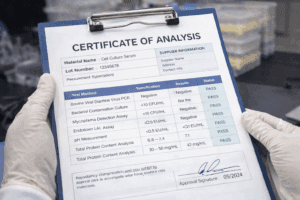
A critical consideration for biomanufacturers is responsibility of serum testing. While suppliers provide Certificates of Analysis (CoAs), end-user manufacturers are ultimately responsible for verifying that supplier testing meets their specific process requirements and regulatory submissions (GeminiBio, 2024; Krishgen Biosystems, 2025).
For CAR-T manufacturers FDA guidance required manufacturers to implement “appropriate procedures to ensure adequate control” of all raw materials This places the burden of demonstrating raw material safety and suitability squarely on the manufacturer, regardless of supplier documentation (FDA, 2022; NIH, 2024).
The TSE/BSE Regulatory Burden
All animal- and blood-derived materials carry regulatory obligations related to Transmissible Spongiform Encephalopathies (TSEs) and variant Creutzfeldt-Jakob disease (vCJD). Compliance requires maintenance of European Directorate for the Quality of Medicines (EDQM) Certificates of Suitability (CEPs), country-of-origin documentation, and per-lot traceability assessments (EDQM, n.d.).
These activities consume substantial internal resources, with estimated hidden compliance costs ranging from $10,000 to $50,000 annually. In 2020, the U.S. Food and Drug Administration acknowledged that the risk of Creutzfeldt-Jakob disease (CJD) and variant CJD (vCJD) transmission from plasma-derived products cannot be absolutely ruled out, and the potential use of warning language for products containing plasma-derived albumin has been discussed in regulatory communications. While no formal labeling requirement has been issued, these discussions introduce additional regulatory uncertainty and potential market liability for products manufactured with blood-derived components.
Eliminating Risk with Recombinant, Chemically Defined Alternatives
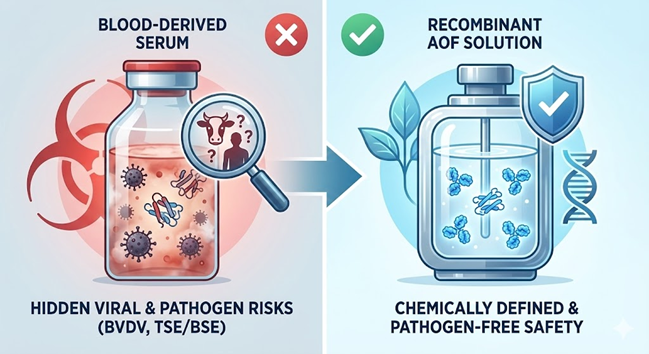
The testing burden and contamination risks documented here are not just operational hurdles; they are fundamental flaws in the use of donor-derived materials. As long as manufacturers rely on serum-based materials, they remain tethered to the biological uncertainties of the donor population.
Chemically defined, recombinant human proteins produced outside of animal and human donor systems provide a direct path to eliminating these risks. By removing donor-derived components from the supply chain, manufacturers can reduce pathogen exposure, simplify regulatory compliance, and improve material consistency across development and manufacturing workflows.
Transitioning away from serum-derived materials allows biomanufacturers to shift focus from risk mitigation to process control, reproducibility, and long-term product safety.
InVitria offers the industry a way to opt out of this risk entirely. Through our scalable non-mammalian technology, we produce GMP-ready recombinant human proteins that are 100% animal-origin-free (AOF).
InVitria’s solutions, such as Exbumin® and Optibumin® (Recombinant Human Albumin) and Optiferrin® (Recombinant Transferrin), provide a definitive answer to safety concerns:
- Zero Pathogen Risk: Because our proteins are expressed in a non-mammalian expression system and produced AOF at the tertiary level, there is no risk of BVDV, HIV, Hepatitis, or other human or bovine adventitious agents.
- Elimination of Testing Burdens: Using InVitria’s AOF products removes the need for expensive viral screening of raw materials and the heavy documentation burden associated with TSE/BSE compliance.
- Regulatory Clarity: Our products eliminate the need for vCJD warning labels and simplify the path to FDA and EMA approval by providing a chemically defined, well-characterized alternative.
- Proven Safety: InVitrias rHSA is the first and only recombinant albumin with precedent of use as an excipient in an FDA-approved injectable therapeutics, proving that safety and performance can coexist.
By switching to InVitria recombinant materials, manufacturers can stop managing the risks of serum and start focusing on the consistency of their science.

The following content is gated. Please, subscribe to open access to it.
Footnotes
References
- Blümel, J. (2021). Viral safety of raw materials used for production of ATMPs. Raw Materials Workshop.https://ipq.org/wp-content/uploads/2021/09/BLUMEL_JOHANNES-Raw-Materials-Workshop-2021.pdf
- Cell Culture Dish. (2020). FDA issues guidance for warning labels on all drugs produced using blood products, including plasma-derived albumin.
https://cellculturedish.com/fda-issues-guidance-for-warning-labels-on-all-drugs-produced-using-blood-products-including-plasma-derived-albumin/ - dos Santos, V. T. M., Mizukami, A., Orellana, M. D., Caruso, S. R., da Silva, F. B., Traina, F., de Lima Prata, K., Covas, D. T., & Swiech, K. (2016). Characterization of human AB serum for mesenchymal stromal cell expansion. Transfusion Medicine and Hemotherapy, 43(1), 11–21. https://pmc.ncbi.nlm.nih.gov/articles/PMC5318935/
- European Directorate for the Quality of Medicines and HealthCare (EDQM). (n.d.). Certificates of suitability to the monographs of the European Pharmacopoeia (CEPs): TSE risk assessment.
https://faq.edqm.eu/pages/viewpage.action?pageId=1377058 - Food and Drug Administration. (2022). Considerations for the development of chimeric antigen receptor (CAR) T cell products.
https://www.fda.gov/media/156896/download - GeminiBio. (2024). Cell therapy: Regulatory compliant human AB serum.
https://www.geminibio.com/resource/cell-therapy-regulatory-compliant-human-ab-serum/ - Giangaspero, M., et al. (1999). Contamination of bovine fetal serum with bovine viral diarrhea virus. Journal of Veterinary Diagnostic Investigation, 11(6), 523–528.
https://pubmed.ncbi.nlm.nih.gov/10785940/ - InVitria. (n.d.). The hidden costs of blood-derived raw materials: What you don’t see is costing you. Internal document.
- Krishgen Biosystems. (2025). Human AB serum for cell culture.
https://www.krishgenbiosystems.com/cell-and-gene-therapy/bioivt-human-ab-serum/ - National Institutes of Health. (2024). Regulatory knowledge guide for blood and blood products.
https://seed.nih.gov/sites/default/files/2024-03/Regulatory-Knowledge-Guide-for-Blood-and-Blood-Products.pdf - Salgado-Miranda, C., et al. (2021). Detection and genotyping of bovine viral diarrhea virus in fetal bovine serum. Viruses, 13(5), 823.
https://pmc.ncbi.nlm.nih.gov/articles/PMC8107421/