


Supply Chain Resilience: The Fragility and Finite Nature of Serum-Derived Raw Materials
Published on 10 February 2026
Article
Reading time: 7 minutes
Share this article:


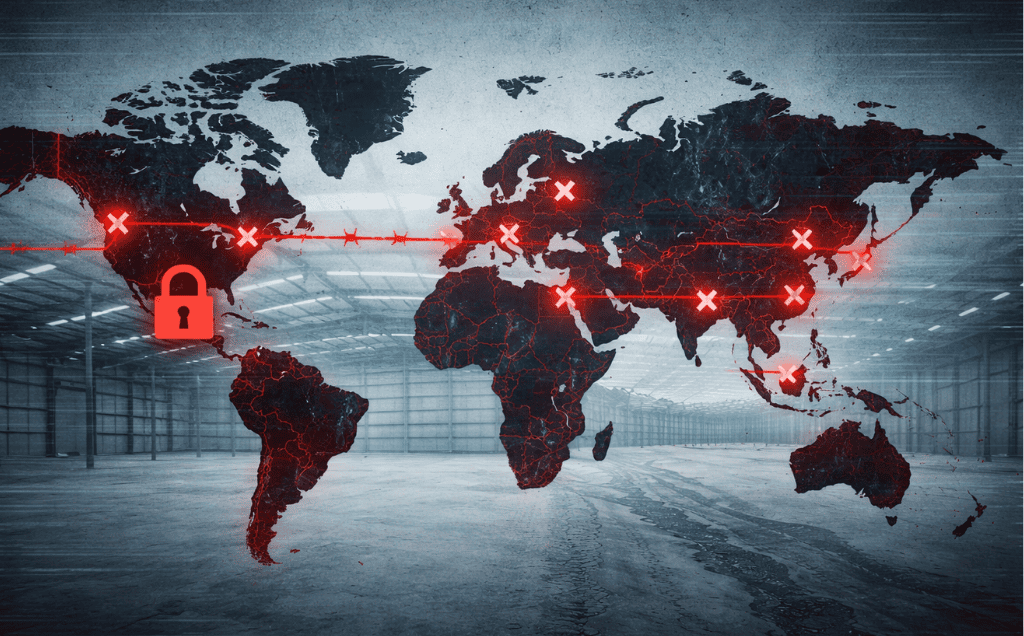
The biopharmaceutical supply chain is currently resting on a fragile foundation of animal- and human-derived raw materials. As the number of approved biologics and advanced therapies continues to grow, demand for serum-derived components is increasing against a finite and increasingly constrained supply base. This article examines four primary “cracks” in that foundation:
- Agricultural constraint – A historic collapse in U.S. cattle inventory that threatens fetal bovine serum (FBS) availability
- Biological risk – The rise of pathogenic outbreaks like African Swine Fever that risk cross-species contamination
- Geopolitical exposure – A border-dependent plasma economy vulnerable to shifting immigration policies
- Demographic erosion – A long-term decline in blood donors under the age of 50 following the prolonged disruption of high school and college blood drives during the COVID-19 pandemic.
With prices surging, lead times extending, and supply volatility driven by factors entirely outside manufacturer control, serum-derived materials represent an existential risk to modern biomanufacturing. Transitioning to chemically defined, recombinant alternatives is no longer an optional innovation, it is the viable path to ensure long-term manufacturing resilience given the continued growth and promise of the therapeutics that rely on these raw materials.
Agricultural Constraint
Fetal Bovine Serum: A Dwindling Resource
 Fetal bovine serum (FBS) has long been considered the gold standard supplement for eukaryotic cell culture, due to its complex mixture of essential growth factors, hormones, lipids, and minerals that facilitate cell growth, function, and adhesion (Kan, 2020). However, because FBS is a byproduct of the beef industry, its availability is inextricably linked to cattle production trends, which are increasingly unfavorable.
The Perfect Storm: Cattle Inventory Collapse
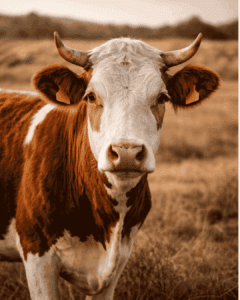
In 2025, the United States reached its lowest national cattle inventory since 1951 (GEN News, 2025). This dramatic decline stems from multiple converging factors:
- Persistent drought conditions across major cattle-producing regions have forced ranchers to reduce herd sizes and delay restocking.
- Rising feed and fuel costs have made cattle rearing economically challenging, prompting some producers to exit or downsize operations.
- Climate extremes, including wildfires and environmental stressors, have compounded the effects of drought.
- Herd rebuilding efforts retain more heifers for breeding rather than sending them to slaughter, reducing short-term slaughter rates.
These dynamics directly affect FBS availability. Even modest reductions in slaughter volume can significantly reduce serum output, with estimates suggesting potential declines of 30-50% under constrained conditions (GEN News, 2025). The USDA forecasted US beef production in 2025 to be lower than 2024, with estimates showing 4% (“A Review of 2025 Beef and Cattle Markets,” 2025), translating to reduced serum collection from bovine fetuses during slaughter.
Biological Risk
Novel Pathogens in Livestock: The African Swine Fever Example
The global spread of African swine fever (ASF) illustrates another critical vulnerability in the of supply chain risk for serum-derived products. ASF is a high-consequence foreign animal disease endemic to sub-Saharan Africa that has spread throughout Europe, Asia, and the Caribbean (Cochran et al., 2023; Mutua & Dione, 2021). As of March 2024, millions of pigs have either died or been culled as a direct result of ASF, having a large impact on global pork supplies (Merck Veterinary Manual, 2024).
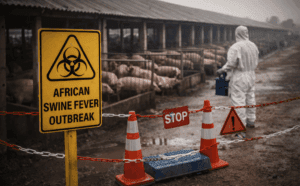
Although ASF primarily affects swine, the outbreak highlights systematic risks relevant to all animal-derived biologics:
- Disease surveillance disruption: COVID-19 restrictions compromised ongoing testing schemes for endemic diseases and lowered disease surveillance efforts.
- Feed contamination pathways: ASFV can survive in feed ingredients for extended periods, with reported half-lives from 9.6 to 14.2 days.
- Cross-species contamination concerns: Serum and biological products can serve as vectors for pathogen transmission across species barriers.
Following COVID-19, the suspension of disease control programs further destabilized livestock supply chains, demonstrating how novel pathogens can rapidly and unpredictably disrupt animal-derived raw material availability (Hashem et al., 2020). For FBS-dependent manufacturers, this serves as a cautionary example of how external biological threats can cascade into global shortages.
Geopolitical Exposure
Border Disruptions and the Plasma Supply Crisis
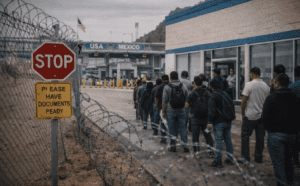
Manufacturers relying on human serum albumin (HSA), human AB serum, or plasma-derived proteins face a separate but equally severe risk: dependence on a geographically and politically fragile donor ecosystem. Over 50 plasma collection centers operate within 50 miles of the U.S.-Mexico border, many of which depend on daily cross-border donors from Mexican nationals to maintain plasma supply (Chen, 2022).
The Border-Dependent Donor Economy
U.S. law permits non-citizens with Border Crossing Cards to donate plasma up to twice a week, even though selling plasma is illegal in Mexico (Chen, 2022). This regulatory loophole has enabled companies like Grifols and CSL Plasma to build a border-dependent donor economy.
Key characteristics of this model include:
- Compensation: Mexican nationals typically receive $30-50 per donation, a substantial incentive for economically vulnerable populations.
- Frequency: Donors cross the border multiple times per week specifically to sell plasma (Chen, 2022).
- Volume: Historically, approximatly10% of the U.S. plasma supply originated from the U.S.-Mexico border region (North, D. 2022).
Policy Disruption and Supply Collapse
In 2021, U.S. Customs and Border Protection restricted entry for plasma donors, treating compensated plasma donation as unauthorized work. These restrictions led to a precipitous decline in plasma collection at the border-region centers. In response, Grifols and CSL filed lawsuits against the U.S. government, underscoring the fragility and contested nature of this sourcing strategy (Chen, 2022).
During the COVID-19 pandemic, border closures further exacerbated these disruptions, causing dramatic decline in plasma donations (North, 2022). Prices soared, production timelines slipped, and manufacturers faced acute shortages of plasma-derived proteins, including albumin and transferrin. In response, Federal health officials were forced to permit emergency courier deliveries of biological materials across borders to Canada, highlighting how close the system came to complete failure (North, 2022).
Ethical and Regulatory Vulnerabilities
This border-dependent supply model raises profound ethical concerns regarding economic coercion and donor exploitation. As Dr. Lisa Eckenwiler, a bioethicist at George Mason University, has noted, this system effectively builds the global biologics supply chain on the labor of vulnerable populations (Chen, 2022). These ethical considerations compound regulatory scrutiny and further destabilize reliance on plasma-derived raw materials.
Demographic Erosion
Declining Youth Participation and the Erosion of the Donor Pipeline
Beyond livestock constraints, disease outbreaks, and border policy disruptions, the sustainability of blood- and plasma-derived raw materials has been further strained by pandemic-related disruption to donor recruitment channels. For decades, high school and college blood drives served as a primary entry point for first-time blood donors. During the COVID-19 pandemic, widespread school closures and campus shutdowns resulted in the cancellation of thousands of mobile blood drives, significantly reducing donor collection capacity (Pagano et al., 2021).
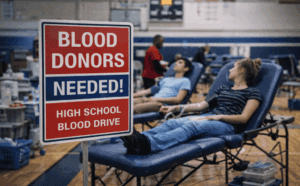
Blood collection organizations have reported that school-based and youth-oriented drives were disproportionately affected during this period and that rebuilding participation among first-time and younger donors has been slower than recovery in other collection settings (American Red Cross, 2024). While comprehensive age-stratified donor data remain limited, the loss of multiple academic years of donor recruitment has raised concerns within the blood collection community about long-term donor pipeline sustainability.
Younger donors play a critical role in maintaining a resilient donor base, as early participation is associated with higher long-term donor retention. Persistent challenges in recruiting new donors following the pandemic therefore increase vulnerability to future disruptions, including public health emergencies and labor shortages (Pagano et al., 2021). Similar recruitment challenges have been reported internationally, reinforcing that donor pipeline erosion is not limited to a single national system (Canadian Blood Services, 2021).
Implications for Biomanufacturing Operations
The convergence of livestock constraints, disease outbreaks, border policy disruptions, and a shrinking donor pipeline creates a compounding risk environment for serum- and plasma-dependent manufacturing. Biomanufacturers Together, these factors undermine the reliability, scalability, and predictability of animal- and human-derived raw material supply. Biomanufacturers face several operational consequences:
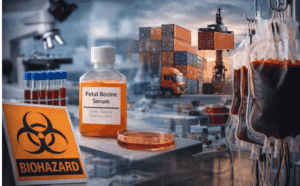
- Price volatility: Tightening supplies and donor recruitment challenges continue to drive higher and less predictable pricing for FBS and plasma-derived proteins (Kan, 2020; GEN News, 2025)
- Allocation and rationing: Shrinking donor pools increase the likelihood of supplier allocation and reduced access, particularly for smaller or early-stage manufacturers (GEN News, 2025; American Red Cross, 204).
- Extended lead times: Declines in donor participation constrain collection capacity, lengthening procurement cycles (Pagano et al., 2021; (Kan, 2020).
- Batch-to-batch inconsistency: Supply constraints increase reliance on blended lots, elevating batch-to-batch variability (GEN News, 2025).
- Reduced surge capacity: An aging donor base limits the system’s ability to respond to demand spikes or scale-up needs (Canadian Blood Services, 2021)
- Force majeure risks: Eroding donor pipelines, future pandemics, border closures, or livestock disease outbreaks could halt supply entirely (Canadian Blood Services, 2021; Chen, 2022).
Securing the Future with InVitria
The fragility of the current serum-derived supply chain represents an unsustainable risk for modern biomanufacturing. When the ability to deliver life-saving medicine is tied to cattle slaughter rates or international border policy, the traditional “gold standard” becomes a liability.
InVitria’s recombinant technology provides a structurally different approach to supply security. By producing essential proteins such as Optiferrin (recombinant transferrin) and Exbumin (recombinant human albumin), using a scalable, non-mammalian expression system, biomanufacturing can be decoupled from the volatility of animal agriculture and human donor dependence.
Choosing recombinant alternatives enables:
- Independence from livestock trends: Production remains scalable and unaffected by cattle inventory collapses or agricultural diseases.
- Geopolitical stability: Reliance on border-crossing donor populations is eliminated.
- Safety and purity: Animal-origin-free (AOF), chemically defined materials remove the risk of cross-species pathogen transmission, providing a secure, chemically defined alternative to FBS and plasma.
In an era of increasing therapeutic demand and global uncertainty, supply- chain resistance is foundational to the future of biomanufacturing.

The following content is gated. Please, subscribe to open access to it.
Footnotes
References
- American Red Cross. (2024). Red Cross declares emergency blood shortage, calls for donations during National Blood Donor Month.
https://www.redcross.org/about-us/news-and-events/press-release/2024/red-cross-declares-emergency-blood-shortage-calls-for-donations-during-national-blood-donor-month.html - Canadian Blood Services. (2021). Stem cells without borders.
https://www.blood.ca/en/stories/stem-cells-without-borders - Chen, C. (2022, October 13). Pharma companies sue for the right to buy blood from Mexicans along border. ProPublica.
https://www.propublica.org/article/pharma-companies-sue-for-the-right-to-buy-blood-from-mexicans-along-border - Cochran, H. J., Bosco-Lauth, A. M., Garry, F. B., Roman-Muniz, I. N., & Martin, J. N. (2023). African swine fever: A review of current disease management strategies and risks associated with exhibition swine in the United States. Animals, 13(23), 3713.
https://doi.org/10.3390/ani13233713 - GEN News. (2025). Confronting a dwindling supply of fetal bovine serum.
https://www.genengnews.com/topics/bioprocessing/confronting-a-dwindling-supply-of-fetal-bovine-serum/ - Gómez-Romero, N., Velazquez-Salinas, L., Ridpath, J. F., Verdugo-Rodríguez, A., & Basurto-Alcántara, F. J. (2021). Detection and genotyping of bovine viral diarrhea virus found contaminating commercial veterinary vaccines, cell lines, and fetal bovine serum lots originating in Mexico. Archives of Virology, 166(7), 1999–2003.
https://doi.org/10.1007/s00705-021-05089-9 - Hashem, N. M., González-Bulnes, A., & Rodriguez-Morales, A. J. (2020). Animal welfare and livestock supply chain sustainability under the COVID-19 outbreak: An overview. Frontiers in Veterinary Science, 7, 582528.
https://doi.org/10.3389/fvets.2020.582528 - Kan, A. (2020). Fetal bovine serum: Growing demand, but challenging supply. Strategic Directions.
https://strategic-directions.com/blog/fetal-bovine-serum-growing-demand-but-challenging-supply/ - Merck Veterinary Manual. (n.d.). African swine fever. Merck & Co., Inc.
https://www.msdvetmanual.com/generalized-conditions/african-swine-fever/african-swine-fever - Mutua, F., & Dione, M. (2021). The context of application of biosecurity for control of African swine fever. Frontiers in Veterinary Science, 8, 689811.
https://doi.org/10.3389/fvets.2021.689811 - North, D. (2022, July 18). U.S. immigration policies impact the world’s blood supply — an odd story. Center for Immigration Studies.
https://cis.org/North/US-Immigration-Policies-Impact-Worlds-Blood-Supply-Odd-Story - Pagano, M. B., Hess, J. R., Tsang, H. C., Staley, E., Gernsheimer, T., Sen, N., … Cohn, C. S. (2021). Prepare to adapt: Blood supply and transfusion support during the first 2 weeks of the 2019 novel coronavirus (COVID-19) pandemic affecting Washington State. Transfusion, 61(3), 908–911.
https://doi.org/10.1111/trf.15789 - A Review of 2025 Beef and Cattle Markets. (2025, December 17). USDA December WASDE forecasts U.S. beef production at 25.95 billion pounds, ~4.1% below 2024.
https://u.osu.edu/beef/2025/12/17/a-review-of-2025-beef-and-cattle-markets/